
Almost everyone considering a dental implant asks the same first question: "Will it hurt?" Since it is a surgical procedure, this worry is completely natural — and you are not alone, as fear of pain is the most common reason people delay treatment. The good news is that implant treatment is far more comfortable than most patients expect, and you feel no pain during the procedure itself.
In this in-depth guide we walk through exactly what you feel at each stage of treatment, the factors that affect your comfort, sedation options for anxious patients, how long post-operative discomfort lasts, and what you can do to keep it to a minimum.
The Short Answer: Implant Surgery Is Not Painful
The implant is placed under local anaesthetic, so the treated area is completely numb. You feel no pain during the procedure — at most a sensation of pressure or vibration. The only real discomfort comes afterwards, once the anaesthetic wears off, and it is usually mild and easily controlled with simple painkillers. Many patients say the procedure is more comfortable than having a filling.
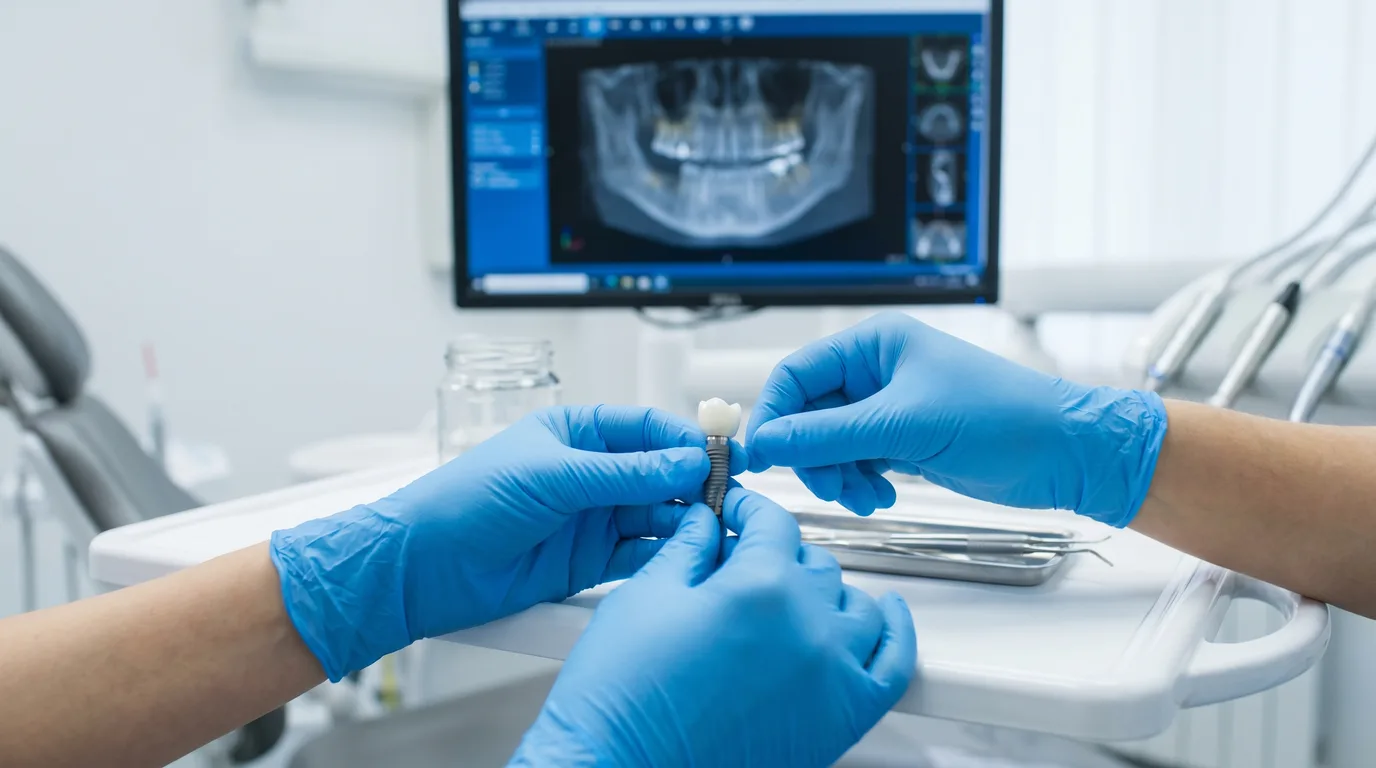
Why Are People Afraid of Implants? Fear vs Reality
Most of the fear comes from the idea that a screw is placed into bone, which sounds frightening, and from exaggerated stories online. In reality, modern implant surgery has become a planned, controlled and minimally invasive procedure thanks to advanced imaging and surgical techniques. The inner part of the jawbone has few pain-sensing nerve endings, which is why placing an implant under anaesthetic is not felt once the gum is numb. Most of the fear comes from expectation, not from experience.
The Implant Process, Step by Step — What You Feel
1. Examination and Planning (Painless)
First comes an oral examination and a 3D scan (CBCT). This imaging is used to assess bone density, the position of nerves and sinuses, and the exact spot for the implant. Good planning makes the procedure both safer and more comfortable. There is no pain at this stage.
2. Local Anaesthetic (A Mild Pinch)
Before the procedure, the area is numbed with local anaesthetic. The only thing you feel is a brief pinch as the anaesthetic is given — and even that is largely reduced today with a surface numbing gel and slow injection techniques. Within a few minutes the area is completely numb and you stop feeling anything.
3. Implant Placement (No Pain, Just Pressure)
The titanium implant screw is placed into the jawbone. Because the area is numb, you feel no pain — only a slight sensation of pressure or vibration. A single implant usually takes 30–60 minutes. The procedure is minimally invasive, meaning very little tissue trauma and faster healing.
4. Healing (Osseointegration)
The implant needs to fuse with the jawbone, a process called osseointegration, which takes around 2–4 months. You feel no pain during this time; the implant quietly integrates with the bone. Apart from the first few days, you carry on with normal daily life. In suitable cases, same-day "immediate-load" temporary teeth are possible.
5. Fitting the Crown or Bridge
Once healing is complete, your custom-made crown, bridge, or prosthesis is fitted onto the implant. This final stage is also painless, leaving you with natural-looking, fully functional teeth.
Factors That Affect Your Pain Experience
Not every case is the same. The discomfort you feel during and after treatment can vary depending on a few factors:
- Number of implants: A single implant and a full-arch case have different healing journeys.
- Additional procedures: If bone grafting or a sinus lift is needed, the healing period may involve a little more tenderness.
- Bone density and location: The back of the lower jaw can feel different from the front.
- The dentist's experience: An experienced implantologist makes the procedure shorter, less traumatic and therefore more comfortable.
The good news: all of these factors can be managed with proper planning and the right anaesthetic.
For Anxious Patients: Sedation Options
If you have strong dental anxiety, there are extra comfort options alongside local anaesthetic. Sedation makes you relaxed and calm; although you stay awake during the procedure, most patients remember almost nothing afterwards. Different levels, from conscious sedation to general anaesthesia, are planned according to the size of the case and your anxiety level. Sharing your fear with your dentist in advance ensures the most suitable and comfortable method is chosen for you.
How Much Pain Is There After Surgery?
Once the anaesthetic wears off, you may feel mild discomfort, swelling, or tenderness, much like after a tooth extraction. This is completely normal and usually eases noticeably within 2–3 days. Most patients return to normal life the next day with the simple painkillers their dentist recommends.
- First 24 hours: Mild swelling and tenderness are at their peak; a cold compress helps a lot.
- Days 2–3: Swelling starts to settle and discomfort fades.
- After 1 week: Most patients feel no discomfort at all.
Tips to Reduce Pain and Discomfort
- Apply a cold compress to the area on the first day (it reduces swelling).
- Take the painkillers and antibiotics your dentist prescribes, as directed.
- Eat soft, lukewarm foods for the first few days; avoid very hot or hard foods.
- Do not poke the area with your tongue or finger.
- Avoid smoking and alcohol for the first 24 hours; they slow healing.
- Rest with your head slightly raised and avoid heavy exercise on the first day.
- Follow your dentist's oral-care instructions exactly.
Is an Implant More Painful Than a Tooth Extraction?
Most patients say that having an implant placed is even more comfortable than a routine tooth extraction, because the procedure is planned, controlled, and minimally invasive. The discomfort afterwards is usually similar to, or less than, an extraction. Unlike an extraction, the goal of an implant is not to lose something, but to permanently restore a missing tooth.
Does an Implant Hurt in the Long Term?
No. Once healing is complete, the implant feels like a natural tooth and causes no pain in everyday life. The implant itself has no nerve. If pain, bleeding or swelling appears around an implant months or years later, it is usually a sign of a gum/bone infection called peri-implantitis, which is easily resolved with early treatment. Regular check-ups and good oral hygiene keep an implant trouble-free for life.
When Should You Call Your Dentist?
Mild discomfort is normal, but contact your dentist if you experience any of the following:
- Pain that increases or worsens despite painkillers.
- Swelling that does not subside or grows after 3 days.
- Bleeding that won't stop, or discharge / bad odour from the area.
- High fever or feeling generally unwell.
These signs are rare, but early attention is always important.
The Bottom Line
There is no need to fear implant treatment: the procedure is painless under local anaesthetic, and the mild discomfort afterwards fades within a few days and is easy to manage. If your anxiety is strong, sedation options are available, and in the long term a well-cared-for implant causes no pain at all. With an experienced specialist and careful planning, the process is far more comfortable than you might expect.
Learn more on our dental implants page. You can also book a free consultation for an assessment tailored to your case.