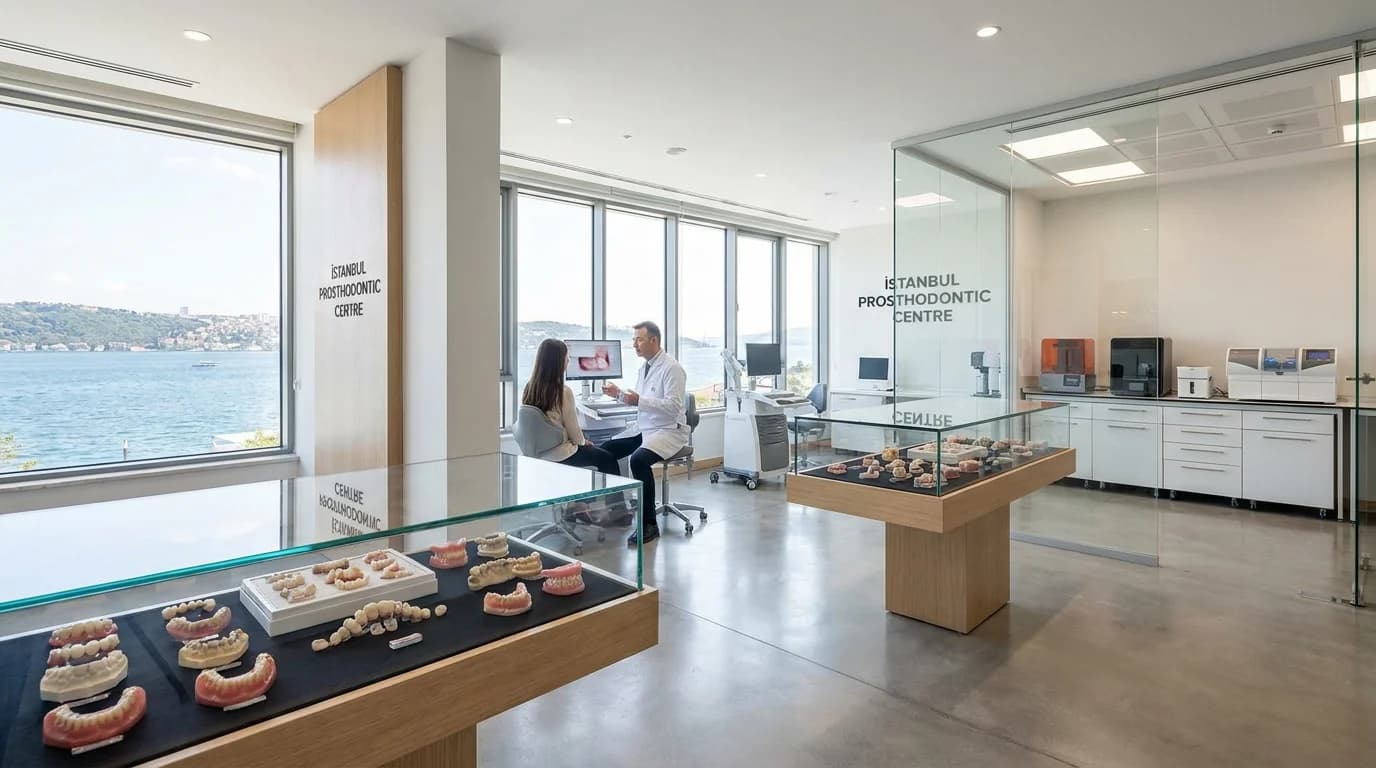
What Are Dental Prosthetics?
Dental prosthetics are artificial tooth restorations designed to replace one or more missing teeth. Tooth loss can occur for a variety of reasons, including decay, fractures, accidents, or extractions. These losses do not simply create an aesthetic problem — they directly affect chewing function, speech, and the health of the jawbone. Dental prosthetic treatment aims to restore all of these functions.
Today, the range of prosthetic options is extensive. Depending on the patient's oral structure, bone density, and personal preferences, different solutions can be applied — including removable dentures, fixed bridge prosthetics, or implant-supported prosthetics. Each option has its own advantages, treatment process, and maintenance requirements. Choosing the right prosthetic therefore requires a thorough evaluation with an experienced dentist.
In terms of materials, options include acrylic, porcelain, metal alloy, and zirconia. Zirconia prosthetics have become the most preferred choice in recent years due to their high durability and natural appearance. The success of a dental prosthetic depends not only on material quality, but also on accurate diagnosis, precise impressions, and proper fitting.
When Are Dental Prosthetics Needed?
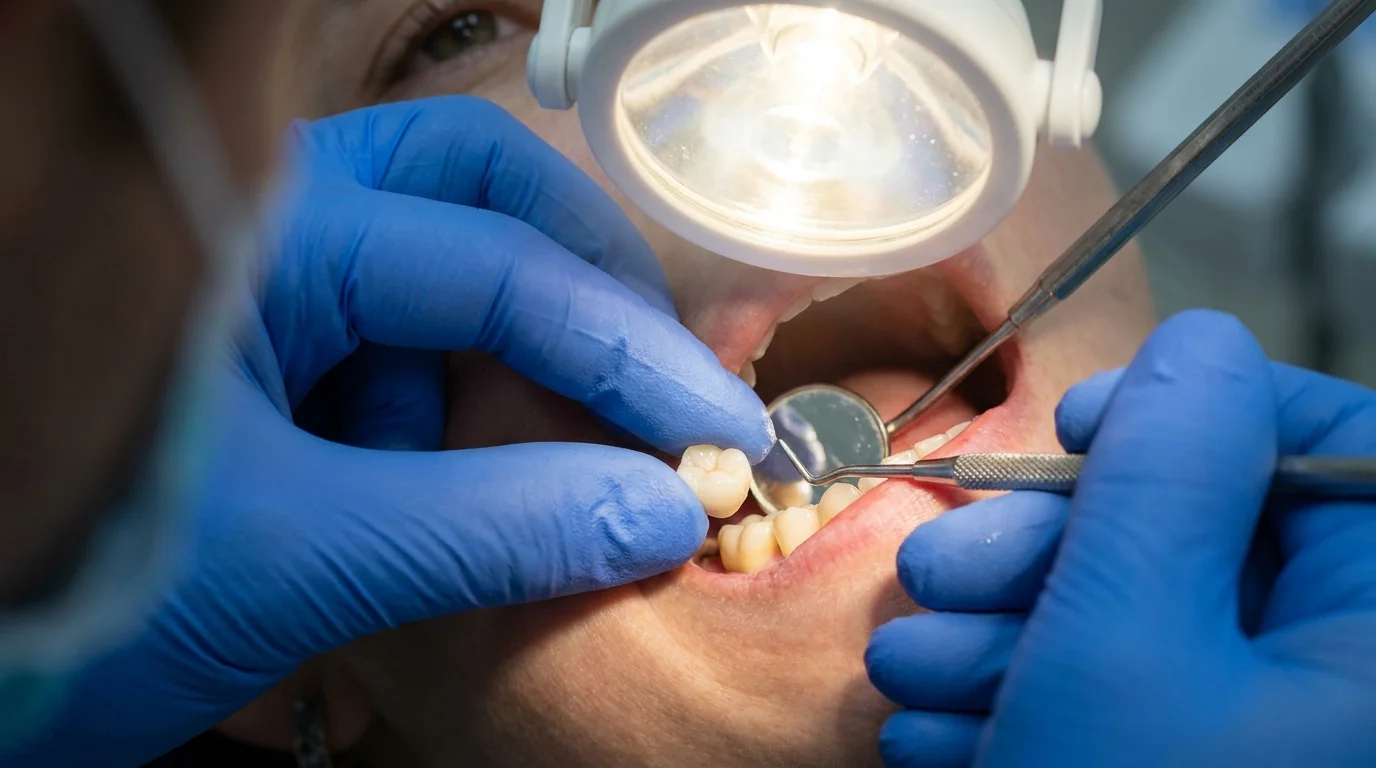
Dental prosthetic treatment is not limited to those who are completely edentulous. Even the loss of a single tooth can cause neighboring teeth to drift, opposing teeth to over-erupt, and the balance of chewing to be disrupted. To prevent these changes from becoming permanent over time, it is recommended to replace the missing tooth as soon as possible.
The following situations are among the primary indicators of a need for dental prosthetics. If you are experiencing any of the conditions listed below, it is advisable to schedule an evaluation with a dentist.
- Loss of one or more teeth due to extraction
- Tooth fractures or complete tooth loss resulting from an accident or trauma
- Teeth that can no longer be restored due to advanced decay
- Teeth lost as a result of advanced-stage gum disease such as periodontitis
- Developmental causes such as congenitally missing teeth (hypodontia)
- Difficulty chewing, speech problems, or a noticeable change in facial shape
In cases of complete tooth loss, comprehensive solutions such as full removable dentures or implant-supported fixed prosthetics come into consideration. For partial tooth loss, bridge prosthetics or partial removable dentures are evaluated. In both cases, treatment success depends on accurate diagnosis, selection of the appropriate prosthetic type, and regular follow-up appointments.
The Treatment Process, Step by Step
Dental prosthetic treatment is not a single-session procedure — it is a planned process consisting of several stages. Each stage builds on the success of the previous one, and the patient's active participation directly affects the outcome. At VDS Dental, this process is carried out with the highest precision, supported by digital impression technology and in-house laboratory infrastructure.
- Comprehensive examination and diagnosis: The current condition is assessed through an intraoral examination, X-rays, and CT imaging where necessary.
- Treatment planning: The most suitable prosthetic type is determined based on the patient's expectations and oral structure.
- Preliminary procedures: Any existing gum disease is treated, and preparatory steps such as fillings or extractions are completed.
- Impression taking: Precise impressions are taken to create the model from which the prosthetic will be manufactured.
- Prosthetic fabrication: A custom prosthetic is prepared in the laboratory using the selected material.
- Trial and adjustment: The prosthetic is fitted in the mouth and any necessary adjustments are made.
- Permanent placement: Once fit is confirmed, the prosthetic is permanently fixed or handed over for use.
- Follow-up appointments: Check-up visits are scheduled during the first few weeks and then at regular intervals thereafter.
If an implant-supported prosthetic is planned, the process requires a somewhat longer timeframe. Osseointegration — the process by which the implant fuses with the jawbone — typically takes three to six months. After this period, the permanent prosthetic is placed on the implant. Temporary prosthetics allow the patient to get through this waiting period comfortably, both aesthetically and functionally.
Post-Treatment Care and What to Keep in Mind

Post-treatment care is essential to ensure the longevity of a dental prosthetic and to maintain oral health. Removable dentures should be taken out every night and cleaned with a specialized denture brush and cleaning tablets. To prevent the dentures from drying out or cracking, it is recommended to store them in water or a dedicated soaking solution.
For fixed prosthetics and implant-supported prosthetics, the care routine is applied in much the same way as for natural teeth. However, using an interdental brush or dental floss to remove plaque and bacteria that may accumulate beneath the prosthetic is essential. Using fluoride toothpaste and brushing twice a day are the cornerstones of good oral hygiene.
- Avoid hard and sticky foods during the first few weeks to help the prosthetic settle in.
- Remove and reinsert a removable denture over a towel placed by the sink to prevent damage from dropping.
- Do not neglect the health of your remaining natural teeth and gums — schedule regular check-ups.
- If you notice a crack, chip, or poor fit in your prosthetic, contact your dentist promptly.
- Avoid attempting to repair the prosthetic yourself; adhesives purchased over the counter can cause damage.
- At least two dental check-ups per year are recommended for prosthetic wearers.
Over time, changes can occur in the jawbone and gum tissue, which may affect the fit of the prosthetic. Removable dentures may need to be replaced or relined approximately every five to eight years. Fixed prosthetics, with proper care, can maintain their function for fifteen years or more. Regular check-up visits are critically important for detecting these changes early.
Dental Prosthetics at VDS Dental
VDS Dental Istanbul offers internationally standardized dental prosthetic treatment, supported by digital impression systems, CAD/CAM technology, and high-quality zirconia infrastructure. The clinic's prosthetic specialists have experience across all treatment options, including removable dentures, fixed bridges, and implant-supported prosthetics. An individualized treatment plan is created for every patient — personalized solutions are always preferred over a standardized, one-size-fits-all approach.
At our clinic, every stage of the treatment process is communicated with full transparency. From the initial examination to the placement of the permanent prosthetic, patients are informed and their approval is obtained at each step. Treatment schedules for patients traveling from abroad are specially arranged, and the number of appointments is minimized wherever possible. Drawing on Turkey's well-established dental tourism infrastructure, VDS Dental is also able to communicate with international patients in English.
- High-precision prosthetics produced using digital impressions and CAD/CAM technology
- A wide range of materials including zirconia, porcelain, and metal-supported options
- Experienced prosthetic specialists and an implantology team
- Implant surgery and prosthetic restoration available under one roof
- Flexible treatment schedules for both domestic and international patients
- Remote follow-up and consultation support after treatment
If you are considering dental prosthetics, we recommend booking a free consultation as your first step. Our specialist dentist will evaluate your oral structure and walk you through the most suitable prosthetic option for you, along with an estimated treatment timeline. At VDS Dental, our goal is to give you a healthy, aesthetic, and long-lasting smile through the most comfortable process possible.