
A dental implant is a titanium or zirconium-based artificial root system that is placed in place of missing teeth and mimics the natural tooth root. Its most important advantage is that it not only fills the gap; It helps preserve bone volume in the long term by functionally stimulating the jawbone. The fact that there is no need to reduce the size of adjacent healthy teeth, as in bridge treatment, makes the implant one of the first options in modern dentistry.
At VDS Dental, implant planning is treated as a personalized rehabilitation process rather than a quick procedure. The patient's systemic health status, oral hygiene level, bone quality, bite relationship and aesthetic expectations are evaluated together. Thus, the aim is not just to place an implant, but to achieve a functional and aesthetic result that can be used safely for many years. Especially in the planning of the smile line, gum form, tooth length and facial ratio are considered together.
What is a Dental Implant and in Which Situations Is It Preferred?
Implant treatment has a wide range of indications, from single tooth missing to complete edentulism; It ensures that chewing, speech and aesthetic needs are met together. Implants can be applied to teeth lost due to reasons such as trauma, advanced caries, periodontal disease, unsuccessful root canal treatment or congenital missing teeth. While direct implants can be performed in patients with appropriate bone volume, in cases where bone loss is evident, the treatment is completed safely by preparing the area with bone powder (graft) and membrane applications.
The same protocol does not apply to every patient. For example, while aesthetic tissue management comes to the fore in a young patient with a single missing tooth in the anterior region, balanced distribution of chewing forces may be more critical in a patient with multiple missing teeth in the posterior region. Therefore, the diameter, length, brand and superstructure material of the implant are determined individually. Aim; It is the closest feeling to natural teeth, strong biting comfort and stable long-term results.
Why Implant Treatment?
- It eliminates the need to cut adjacent healthy teeth while filling the missing tooth gap.
- It helps preserve the facial profile by reducing the melting that occurs in the jaw bone over time.
- Provides stronger chewing and clearer speaking comfort compared to removable dentures
- It increases self-confidence with its aesthetic appearance close to natural teeth and gum harmony.
- It can be used with high success for many years with correct planning and regular maintenance.
- Adaptable to different treatment scenarios from single tooth to full jaw rehabilitation
Pre-treatment Evaluation and Digital Planning
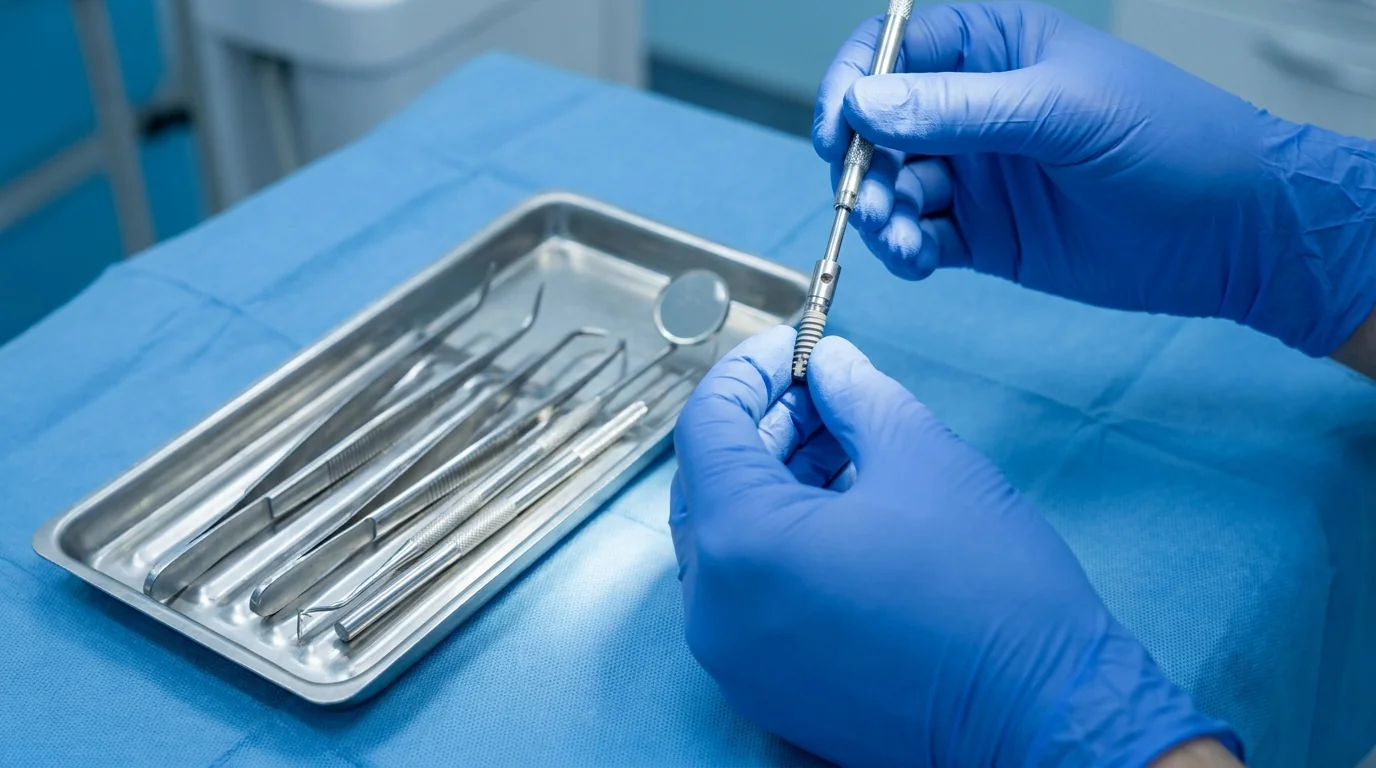
The basis of successful implant treatment is a detailed evaluation before surgery. During the first examination, the patient's complaints, expectations and previous dental procedures are listened to. Then, bone height, bone thickness and anatomical boundaries are measured with panoramic x-ray and, when necessary, three-dimensional dental tomography (CBCT). Critical areas such as the nerve line, sinus floor and adjacent tooth roots are analyzed with millimetric accuracy.
The digital planning phase is the road map that determines where and at what angle the implant will be placed. At this stage, not only the bone but also the aesthetic position and closing relationship of the crown to be placed on it are taken into account. A more controlled and predictable operation is performed using a surgical guide when necessary. Thus, the procedure time is shortened and soft tissue trauma is reduced and recovery comfort is increased.
Implant Treatment Stages
The implant process generally consists of four basic steps: planning, surgical placement, healing and prosthetic restoration. The surgical procedure is performed under local anesthesia; The patient does not feel pain, may only experience a slight pressure sensation. Mild tenderness, swelling or difficulty chewing may occur in the first 24-72 hours after the procedure; This condition is brought under control in a short time in most patients.
The biological integration of the placed implant with the bone is called osseointegration, and this process varies between 6-12 weeks on average, depending on the jaw structure. In some appropriate cases, the temporary tooth can be installed on the same day or in a short time (immediate loading), but this requires primary stability and occlusal conditions to be suitable. When the healing is completed, measurements are taken, a personalized abutment and crown are prepared, then aesthetic-functional checks are performed and the treatment is completed.
Who Can Get an Implant, Who Requires Additional Preparation?
The majority of individuals whose general health condition is stable and who have completed their jaw development may be candidates for implants. Treatment is still possible in patients with a history of diabetes, osteoporosis, smoking, teeth grinding (bruxism) or periodontal disease; However, risk management is planned in more detail. At this point, the aim is not to postpone the treatment, but to achieve predictable success with the right protocols.
In cases with insufficient bone volume, the area can be prepared with advanced surgical techniques. A suitable ground for the implant is created by methods such as sinus lifting, guided bone regeneration (GBR) or block graft. Similarly, aesthetic stability can be enhanced with soft tissue grafting in patients with a thin gingival phenotype. In short, many 'difficult cases' can be treated safely with the right center and correct planning.
Post-Implant Care, Control and Longevity
The most critical factor that determines the lifespan of implants is regular maintenance habits. Brushing with the correct technique twice a day, using dental floss or an interdental brush, and oral care products recommended by the physician protect peri-implant tissue health. Peri-implant mucositis or peri-implantitis may develop, especially if the plaque and tartar accumulated around the implant are not cleaned in time; Therefore, professional care appointments should not be neglected.
The tissues around the implant, closing balance, screw connections and restoration integrity are evaluated at more frequent checks in the first year and every 6 months thereafter. Mechanical loads are balanced by recommending a night plate in patients with a habit of clenching their teeth. Not breaking hard-shelled foods with the front teeth, avoiding habits such as nail biting and maintaining regular check-up discipline significantly extends the life of the implant. With proper care, implants can be used safely for many years.
How Are Implant Prices Determined?
İmplant tedavisinde tek bir sabit fiyat vermek çoğu zaman yanıltıcıdır çünkü her hastanın klinik ihtiyacı farklıdır. Basic items affecting the total cost; The number of implants to be applied, the implant brand chosen, whether bone augmentation is required, the abutment-crown material to be used, and special procedures for the aesthetic area. For example, while only one implant and a single crown may be sufficient for a single missing tooth, a more comprehensive surgical-prosthetic approach may be required for a fixed prosthetic plan in cases of complete edentulism.
For a healthy price evaluation, a correct diagnosis is required first. For this reason, at VDS Dental, final costing is not made until the examination, radiological imaging and digital planning are completed. The plan presented to the patient clearly states which procedure is required and why, which material will be used, and alternative scenarios. Thus, the patient makes a decision by understanding the scope and long-term value of his treatment, not just a number.
Common Misperceptions About Implants
One of the most common misconceptions about implant treatment in society is the idea that the procedure is very painful. However, thanks to modern anesthesia protocols and minimally invasive surgical techniques, implant operations are much more comfortable than expected for most patients. Another misconception is that the implant is completed in the same way and in the same time for every patient. In reality, treatment is individualized; bone condition, systemic health and aesthetic goals directly affect the process.
Another frequently heard statement is that "once you get an implant, there will be no problems for the rest of your life." Although implants are very durable systems, they require maintenance, just like natural teeth. If regular check-ups are not performed or oral hygiene is inadequate, problems may develop in the tissues around the implant. The correct information is this: with a well-planned implant treatment, conscious patient care and periodic physician control, it can be used with high success for many years.
Implant Approach at VDS Dental
In our clinic, implant treatment is not only a surgical procedure, but a multidisciplinary planning process. The surgeon, prosthetic dentist and, when necessary, the periodontology approach are evaluated together to present the most accurate scenario to the patient. Thanks to transparent pricing, stage-based information and personalized treatment plan, our patients clearly know what to expect throughout the process.
If you cannot chew comfortably due to your missing teeth, have aesthetic concerns about your smile, or are not satisfied with the use of removable dentures, implant treatment may be a powerful solution for you. The first step is detailed examination and digital analysis. Our goal at VDS Dental is; It is not a short-term result, but to create a healthy, aesthetic and safe oral structure in the long term.