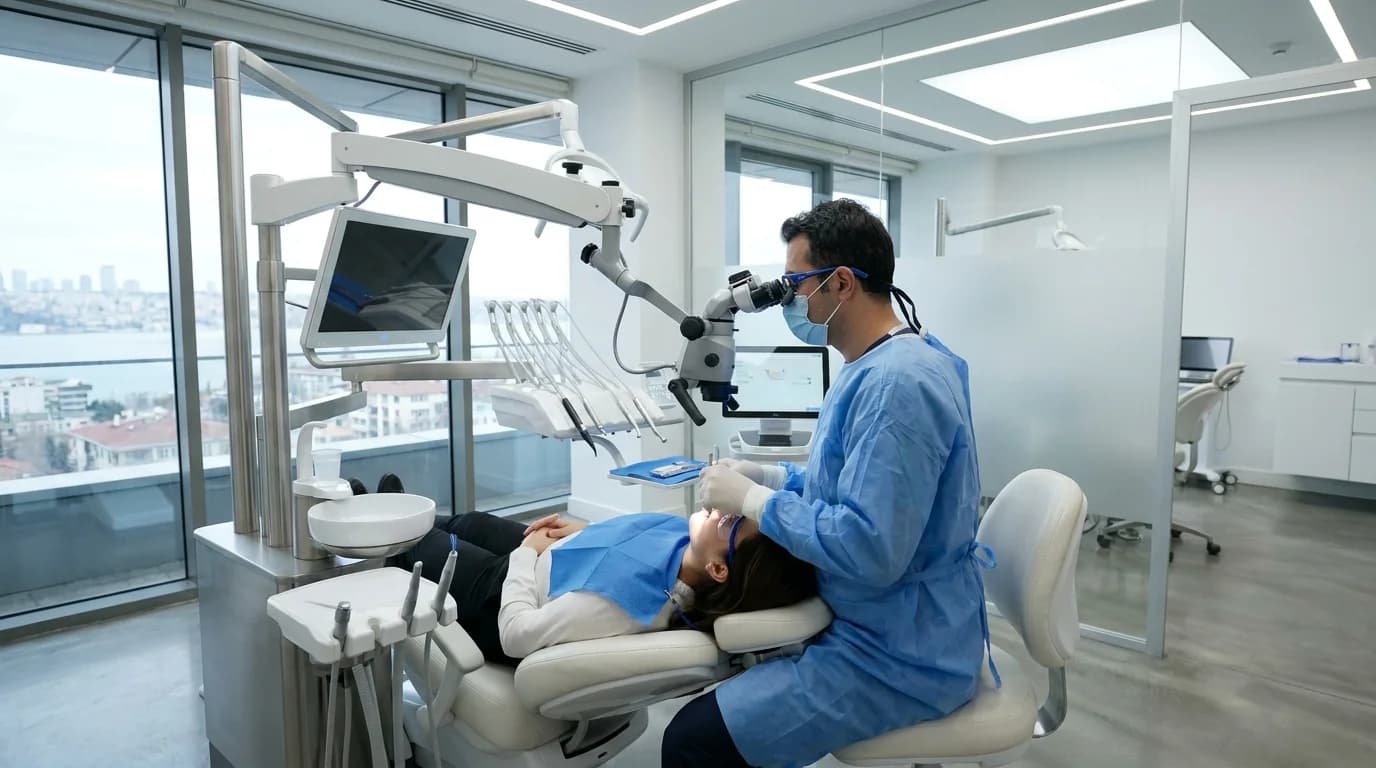
What Is Root Canal Treatment?
Root canal treatment is an endodontic procedure used to eliminate infection or damage affecting the soft tissue inside the tooth — known as the pulp. The pulp consists of nerve fibers, blood vessels, and connective tissue, and provides nourishment during the tooth's development. In a fully mature tooth, the pulp is no longer essential for growth, so removing this tissue does not compromise the tooth's function or health.
Also known as endodontic therapy, this procedure has evolved over centuries into a highly reliable and predictable treatment, thanks to advances in technique combined with today's digital imaging systems, rotary nickel-titanium files, and biocompatible filling materials. The goal is to save the tooth rather than extract it, and to preserve the patient's ability to chew normally.
Contrary to popular belief, modern root canal treatment is not a painful experience. Effective local anesthesia largely eliminates any pain during the procedure. In fact, many patients report that the treatment is far more comfortable than they expected — often no different from a routine filling.
When Is It Necessary?
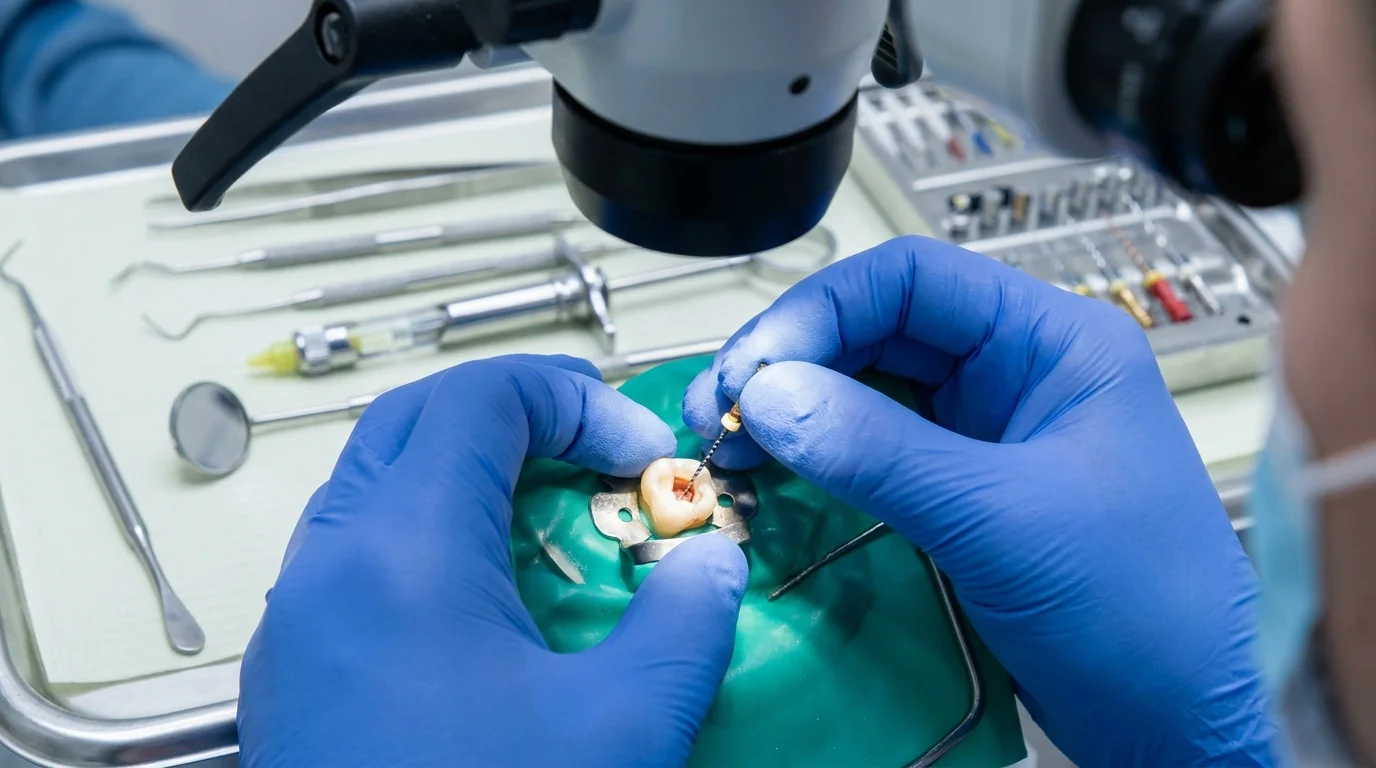
The most common reason root canal treatment becomes necessary is bacteria reaching the pulp through deep decay or a cracked tooth. Once infected, the pulp cannot heal on its own. Left untreated, the infection spreads to the root tip, damages the surrounding bone, and tooth loss becomes inevitable. At that point, treatment is not just about relieving pain — it is also essential for your overall systemic health.
The following symptoms may indicate that root canal treatment is needed. If you are experiencing any of these, it is strongly recommended that you see a dentist without delay.
- Prolonged sensitivity to hot or cold beverages
- Severe pain when chewing or applying pressure to the tooth
- Swelling, redness, or a pimple-like abscess on the gum
- Darkening or graying of the tooth
- Gum recession around the tooth and signs of bone loss
- Loss of sensation in the tooth following trauma, or persistent pain
In some cases, there are no symptoms at all, and a lesion at the root tip is discovered only during a routine X-ray examination. These silent infections also require treatment. This is why periodic dental check-ups at least once a year are critically important for early detection and simpler treatment options.
The Treatment Process, Step by Step
Root canal treatment can be completed in a single session or over two to three visits, depending on the case. The complexity of the canals, the extent of the infection, and the patient's overall oral health are the main factors that determine the number of sessions required. At VDS Dental, a digital panoramic X-ray — and, when necessary, a three-dimensional cone beam computed tomography (CBCT) scan — is taken before treatment so that a detailed treatment plan can be prepared for each patient.
- Examination and Diagnosis: An accurate diagnosis is established through clinical evaluation, radiographic imaging, and a review of the patient's dental history.
- Anesthesia: Regional local anesthesia is administered to fully numb the tooth being treated and the surrounding area.
- Isolation: A latex sheet called a rubber dam is placed around the tooth to create a sterile working environment.
- Access Opening: A small opening is made in the crown of the tooth to gain access to the pulp chamber.
- Pulp Removal: Infected or necrotic pulp tissue is removed from the canals using specialized endodontic files.
- Canal Shaping and Irrigation: The canals are widened and shaped, then flushed repeatedly with antimicrobial solutions to eliminate all bacterial debris.
- Filling: The cleaned canals are filled with gutta-percha, a biocompatible material, and sealed with root canal sealer.
- Temporary or Permanent Restoration: A temporary filling is placed at the end of the session; once treatment is complete, the tooth is restored with a permanent filling or crown.
After treatment is complete, an appropriate restoration must be planned to ensure the tooth's long-term health. Because root canal-treated teeth can become more brittle over time, full-coverage crown placement is recommended — especially for back teeth. This protects the tooth's ability to withstand the forces of chewing.
Aftercare and What to Watch Out For

In the first few days after root canal treatment, you may experience mild discomfort or sensitivity. This is a temporary inflammatory response to the mechanical work performed during the procedure and is completely normal. Pain relievers recommended by your dentist will be sufficient to manage this period comfortably.
The key aftercare guidelines to follow after treatment are:
- Avoid eating until the anesthesia has completely worn off to prevent accidental biting injuries.
- For the first 24–48 hours, avoid hard, crunchy, or sticky foods.
- Brush your teeth twice a day with a soft-bristled toothbrush and do not neglect flossing.
- While the temporary filling is in place, avoid chewing on that side as much as possible.
- If you notice unusual symptoms such as swelling or fever, contact your clinic immediately.
- Keep your appointment for the permanent restoration without delay — a temporary filling should not be left in place for an extended period.
For long-term success, the two most critical factors are the quality of the permanent restoration placed after treatment and the patient's commitment to regular follow-up visits. With a well-fitted crown and consistent oral hygiene, a root canal-treated tooth can function without problems for decades.
Smoking can prolong the healing process and increase the risk of infection. Reducing or quitting smoking during and after treatment will have a positive impact on both the outcome of the procedure and your overall oral health.
Root Canal Treatment at VDS Dental
At VDS Dental Istanbul, root canal treatments are performed by specialist endodontists using our state-of-the-art digital infrastructure. Using our CBCT imaging system, we create three-dimensional maps of the canals to identify hidden canal anatomy, and we achieve the highest standards of cleaning with rotary nickel-titanium systems and ultrasonic irrigation technology.
Our treatment protocols are aligned with the guidelines of international endodontic associations. With single-use sterile instrument sets, biocompatible filling materials, and strict sterilization standards, every patient is treated in a safe environment. Sedation options are also available for anxious patients.
- Reliable outcomes even in complex cases, delivered by a specialist endodontics team
- Detailed pre-treatment diagnosis and planning using digital X-ray and CBCT
- Time-saving single-session root canal protocols
- Patient communication support in Turkish, English, and Arabic
- Post-treatment follow-up and check-up appointments covered under our guarantee
- Transparent pricing and flexible payment options
Our clinic is conveniently accessible from both the European and Asian sides of Istanbul. We welcome all patients experiencing tooth pain or who have previously been advised to undergo root canal treatment. You can fill out our online appointment form or call our clinic directly to schedule a free initial consultation.